釧路湿原・丹頂
Hokkaido
Hundred Scenes of Japan
Scene No.3 — Hokkaido

Red-Crowned Cranes
of Kushiro

Japan nearly lost this bird. A century ago a few dozen survivors were found hiding in the Kushiro marsh, and the farmers of Tsurui started feeding them through the winters. Now, on the coldest mornings, their descendants dance in the snow for anyone willing to get up before the sun.

Access Lv.3 Budget ~¥55–80k Best: Dec – Feb Coldest dawns win Wildlife · Marsh
Published Aug 2, 2026 · Updated Aug 13, 2026
Photo by Sammy Wong on Unsplash, taken in Tsurui itself
02 — The Story

The bird that was already extinct

For most of the twentieth century, Japan believed the tancho was gone: hunted out, its wetlands drained. Then a handful were found alive in the one place too boggy to farm: the Kushiro marsh. In the killing winter of 1952, villagers began scattering corn. The cranes stayed. The village eventually renamed itself Tsurui ("where the cranes live"), and the population climbed from dozens to well over a thousand.

That's the history. What you fly here for is the dance: two red-crowned cranes facing each other in falling snow, wings wide, heads thrown back, in a courtship display that hasn't changed since the Pleistocene. Photographers count Tsurui among the great wildlife sites on Earth.
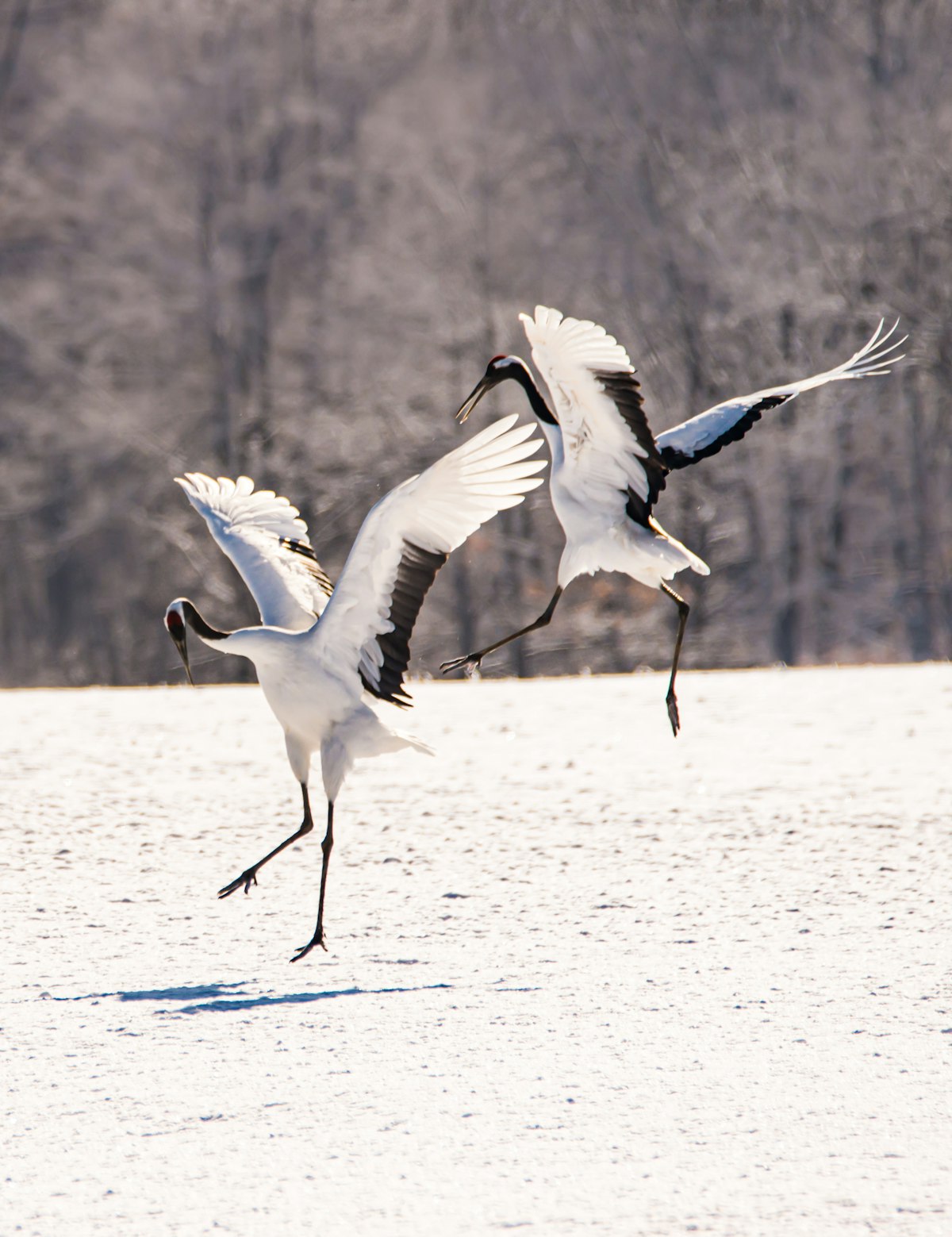
Two red-crowned cranes dancing in the snow in Hokkaido
The dance is part courtship, part reaffirmation, performed by pairs that mate for life. Photo by Birger Strahl on Unsplash
03 — When to Go

Early December to early March, the colder the better

The cranes live here all year, but only winter concentrates them at the feeding grounds. The colder the dawn, the better the scene: river mist thickens until the birds seem to materialize out of white.

Jan
Feb
Mar
Apr
May
Jun
Jul
Aug
Sep
Oct
Nov
Dec

◎ feeding season (roughly early Dec – early Mar): up to 150–200 birds at the sites ○ summer: the marsh is green and the cranes are dispersed, nesting (a canoe trip, not a crane show) △ shoulder weeks.

The Peak Moment

Otowa Bridge, before sunrise, at −15°C or colder: the river steams, frost furs every branch, and the cranes wake standing in the warm water. Roughly one morning in three delivers it.

The Feeding Clock
Otowa Bridgethe roost at dawn; photographers arrive in the dark~5:30 a.m.
Tsurumidaifree roadside feeding ground~9:00 · ~13:00
Akan Crane Center¥480 · morning feed; the famous 2 p.m. fish toss ended in 2016~8:00 a.m.

Times drift with the season and the birds' mood. Treat as a planning guide. Checked August 2026.

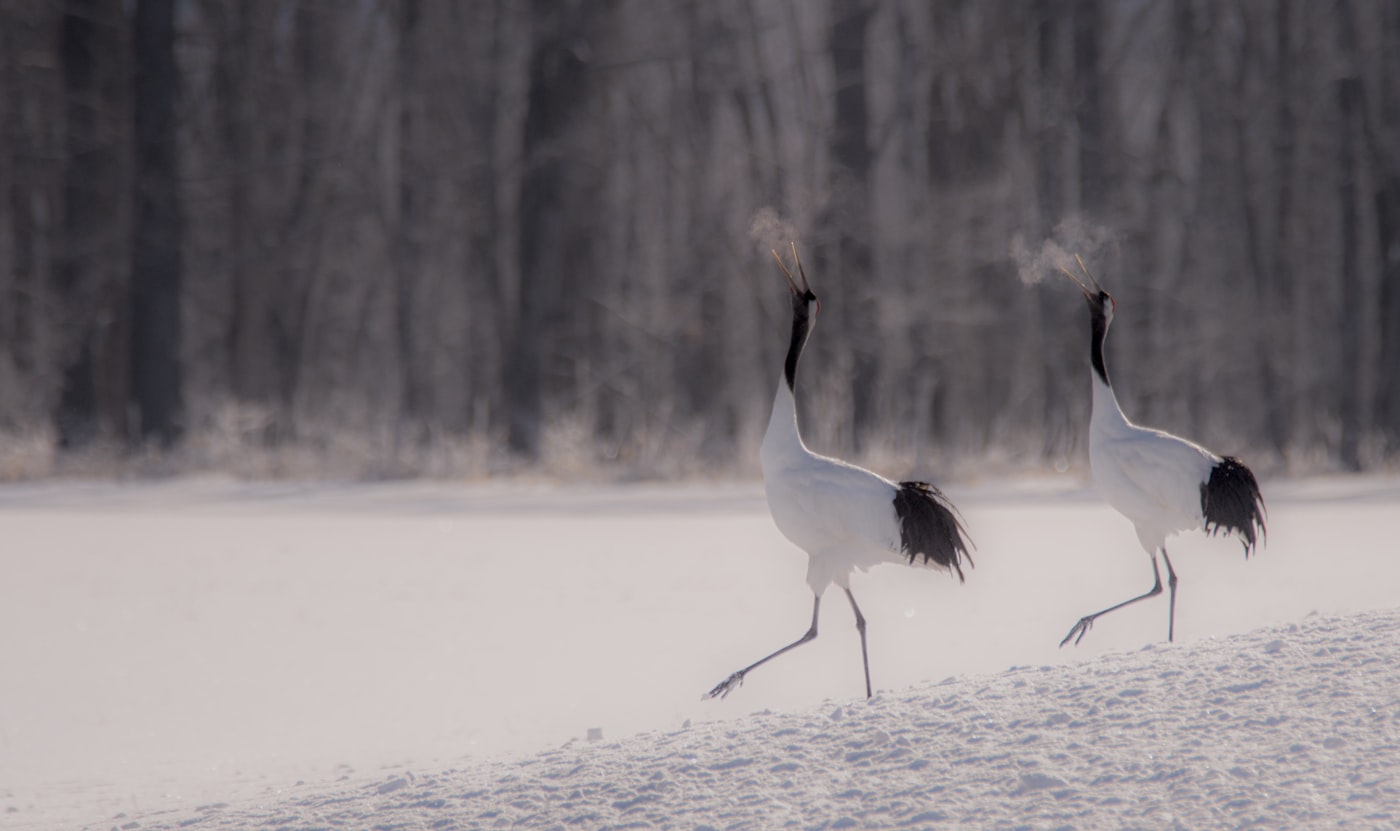
Cranes exhaling steam in the extreme cold of a Hokkaido morning
Cold enough to see their breath. This is the ◎ condition. Photo by Birger Strahl on Unsplash
04 — Getting There

Fly east, then drive on ice

Lv.3
The flight is easy, eight a day. The difficulty is the last 40 minutes: no direct bus to the crane villages, so in practice you drive, in a Hokkaido winter.
Tokyo — Haneda
Flight to Kushiro · 1 h 40 m · ¥7,000–15,000 one way
8 flights a day (ANA · JAL · AIR DO); the 7:40 departure lands by 9:15
Kushiro Airport Five rental counters at arrivals, winter tires standard
Drive · ~40 min · rental ~¥7,000/day
flat, plowed roads, but black ice is real; go slow and you're fine
Tsurui Village The cranes, at the edge of the great marsh
Car-free: airport bus to Kushiro Station + local bus to Tsurui (~1 h 20 m, ¥1,710–1,820; only a few departures a day). The rail moment: the SL Winter Marsh steam train, Kushiro⇄Shibecha, ¥3,060, mid-Jan–mid-Mar. Ride it for itself, not for transit.
Trip Receipt per person · from Tokyo · 1 night
Flights, round trip~¥20,000–30,000
Rental car, 2 days + fuel~¥14,000
Getting there & around~¥34,000–44,000
Inn · 1 night, dinner & breakfast¥15,000–25,000
Crane Center & meals~¥4,000
The whole scene~¥55,000–75,000

This is the Budget badge itemized. Fly-early fares change everything, so book the flight first. Checked August 2026.

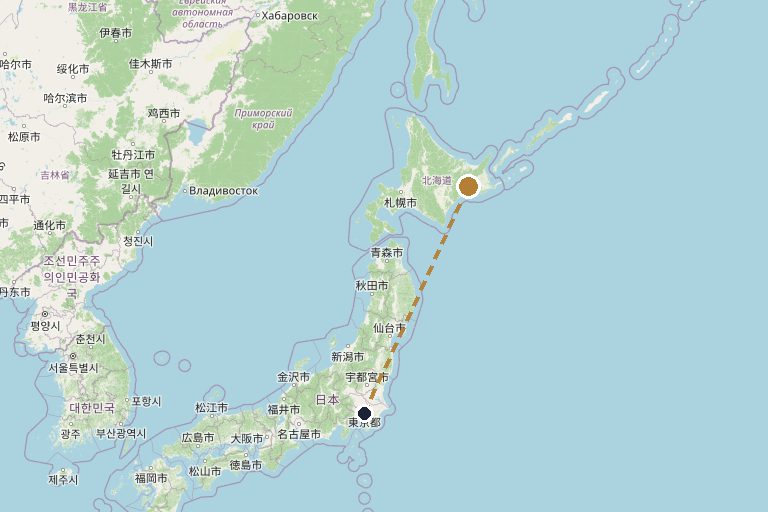
Map of the route from Tokyo (HND) to Tsurui Tokyo (HND) Tsurui Map © OpenStreetMap contributors · tap to open the route in Google Maps
JR Pass

Not this trip. This is a fly-and-drive scene.

Car

Effectively required. Winter tires are standard on rentals here. Never driven on snow? The roads are flat and quiet. This is the gentlest place in Japan to learn.

Cold

January averages −5°C, dawns hit −15°C. Dress for standing still, in insulated boots and mittens worn over gloves, plus a proper winter hat.

Cash

Kushiro city takes cards; Tsurui's small shops, buses and viewing-site stalls prefer cash.

The Honest Part

The postcard (the cranes standing in a steaming river under frost-white trees) needs a −15°C clear dawn, and you get that maybe one morning in three. A day trip will show you cranes at the feeding grounds, but not that image. Stay two nights in Tsurui and give the marsh two dawns.

05 — Where to Stay

Sleep where the photographers sleep

Disclosure: some booking links below may earn us a commission at no extra cost to you. Inns are chosen on merit, never for commission.

Price guide, per person with meals: $$ from around ¥12,000 · $$$ ¥20,000+. The village is small; in crane season, book early.

Hotel TAITO

$$
Tsurui · run by a crane photographer · onsen

The owner shoots the birds you came for and runs dawn tours to prove it, including access toward Kirakotan Cape that independent travelers can't easily arrange. If you came to photograph the birds, this is the natural base.

English: basicCrane tours in season

Green Park Tsurui

$$
Tsurui · free-flowing moor hot spring

The village's easy choice: amber moor-water onsen that feels like bathing in warm silk, minutes from both feeding grounds. Plain rather than polished, with the shortest pre-dawn drives of the three.

English: basic~¥20,000 for two

ANA Crowne Plaza Kushiro

$$
Kushiro city · international chain

The certainty option: IHG systems, English throughout, city restaurants. The cost is a 50-minute pre-dawn drive to the bridge, so the alarm rings earlier here than in Tsurui.

English: OKMost available of the three
06 — The Next Morning

Plan the day around dawn

Everything good happens before 9:30. The bridge at first light, then coffee from a vending machine that has never felt so important, then Tsurumidai as the 9:00 feeding scatters corn and the sky fills with incoming birds, a sound like torn silk. Tour buses arrive later in the morning, after the roost and the first feeding are over.

Spend the afternoon wide: the Crane Center's hides, or the SL steam train chuffing across the frozen marsh to Shibecha and back. Then one more dawn before the 40-minute drive back to the airport, windows down for exactly four seconds, just to hear the cold.

07 — Commissioned Review

A writer we paid to be blunt

Disclosure: This review was commissioned by SPECTRIP, the publisher of HYAKKEI. The writer traveled independently (their visit date is shown below) and was paid for their writing, not their opinion.
VerdictOne line. Did the scene earn its number? Answered after the visit.
The momentThe specific minute it moved them, and what the light was doing when it did.
Who shouldn't comeThe honest anti-recommendation. Every scene has one.
Expert Panel Score3 travel writers who have stayed here · recruiting now
Impact★★★★★
Onlyness★★★★★
Worth the Journey★★★★★
Stay & Food★★★★★
Return Intent★★★★★

Average of 3 writers with published travel work, each of whom has spent a night here. Panelists are paid for their judgment, never for a number.

08 — Make It a Trip

Build the Frozen East loop

The Frozen East Loop — February

Cranes → Drift Ice of Shiretoko

Both of East Hokkaido's winter spectacles peak in the same weeks, and they sit about three hours apart by car, close enough to combine in a single February trip. Scene No.4 covers the ice.

From Tokyo

A long weekend, flown

Friday's first flight out, two dawns at the bridge, Sunday evening home. The only real cost is sleep: the good hours all come before 9:30 a.m.

09 — Good to Know

The questions you'd ask us over coffee

Do I really need to drive?

Realistically, yes. Buses reach Tsurui a few times a day, and none run early enough for dawn at the bridge. Rentals come with winter tires, and the roads are flat and nearly empty; if you've never driven on snow, conditions here are about as forgiving as it gets.

Can I see them on a day trip?

You can land at 9:15 and be at Tsurumidai for the late-morning feeding, so yes, you'll see cranes. But the Otowa Bridge scene needs you on the bridge before sunrise, around 5:30 in the dark, which in practice means sleeping in Tsurui or Kushiro the night before.

What if I come outside winter?

The cranes stay year-round but disperse into the marsh to nest. You'll glimpse pairs in fields, not gatherings in snow. Summer here is a different (lovely) trip: canoeing the Kushiro River, not crane-watching. The feeding grounds operate roughly early December to early March.

How cold is “dress properly”?

Standing still on a bridge at −15°C for two hours is a different sport from walking around a city. Insulated boots, over-trousers, mittens over thin gloves (for the camera), chemical hand-warmers, and a thermos. Locals will be wearing less than you; dress for standing still anyway.

10 — Traveler Voices

Been here? Tell the next traveler what the guidebooks won't.

Share your story — coming soon