A forest that becomes something else
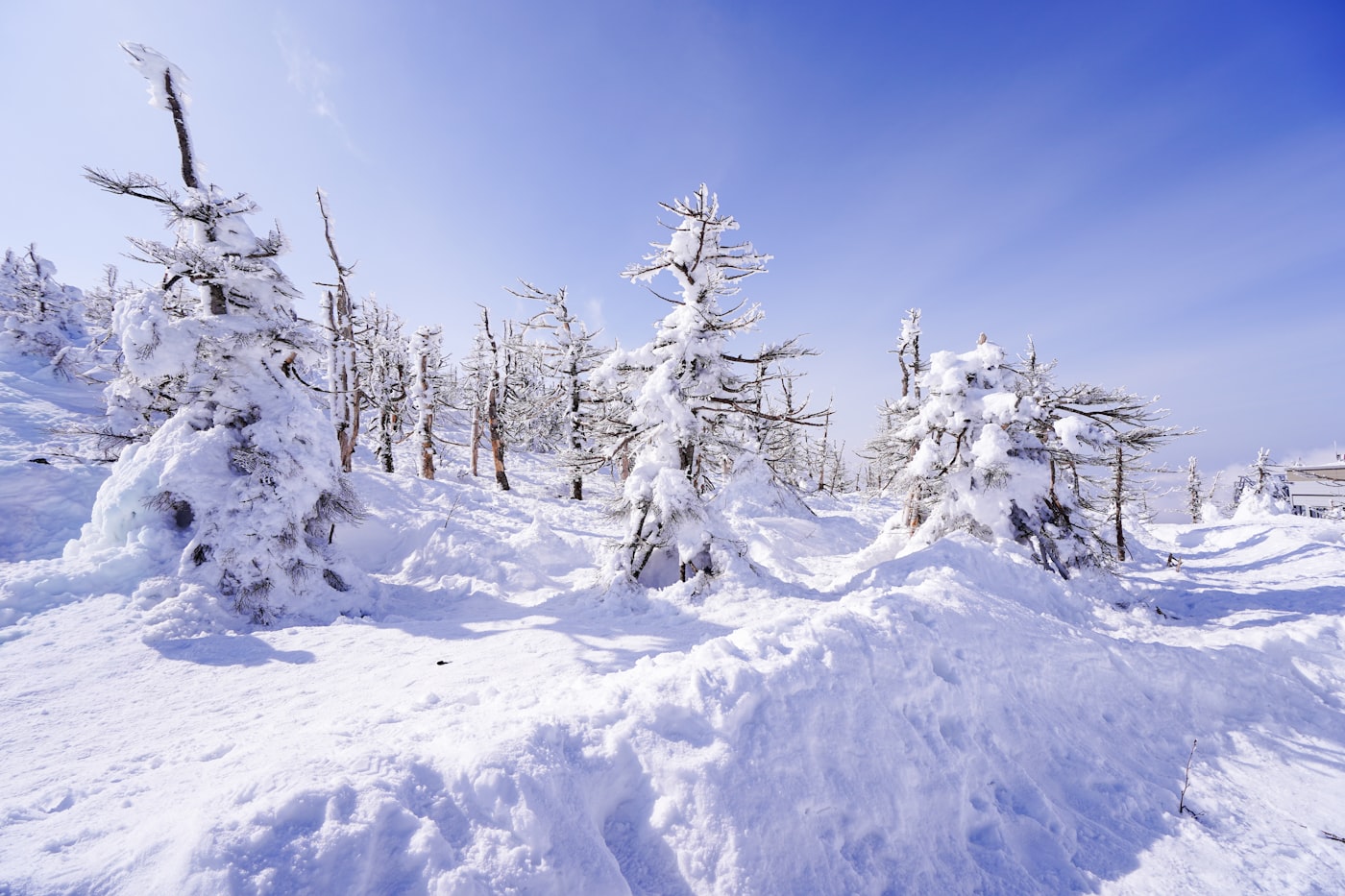
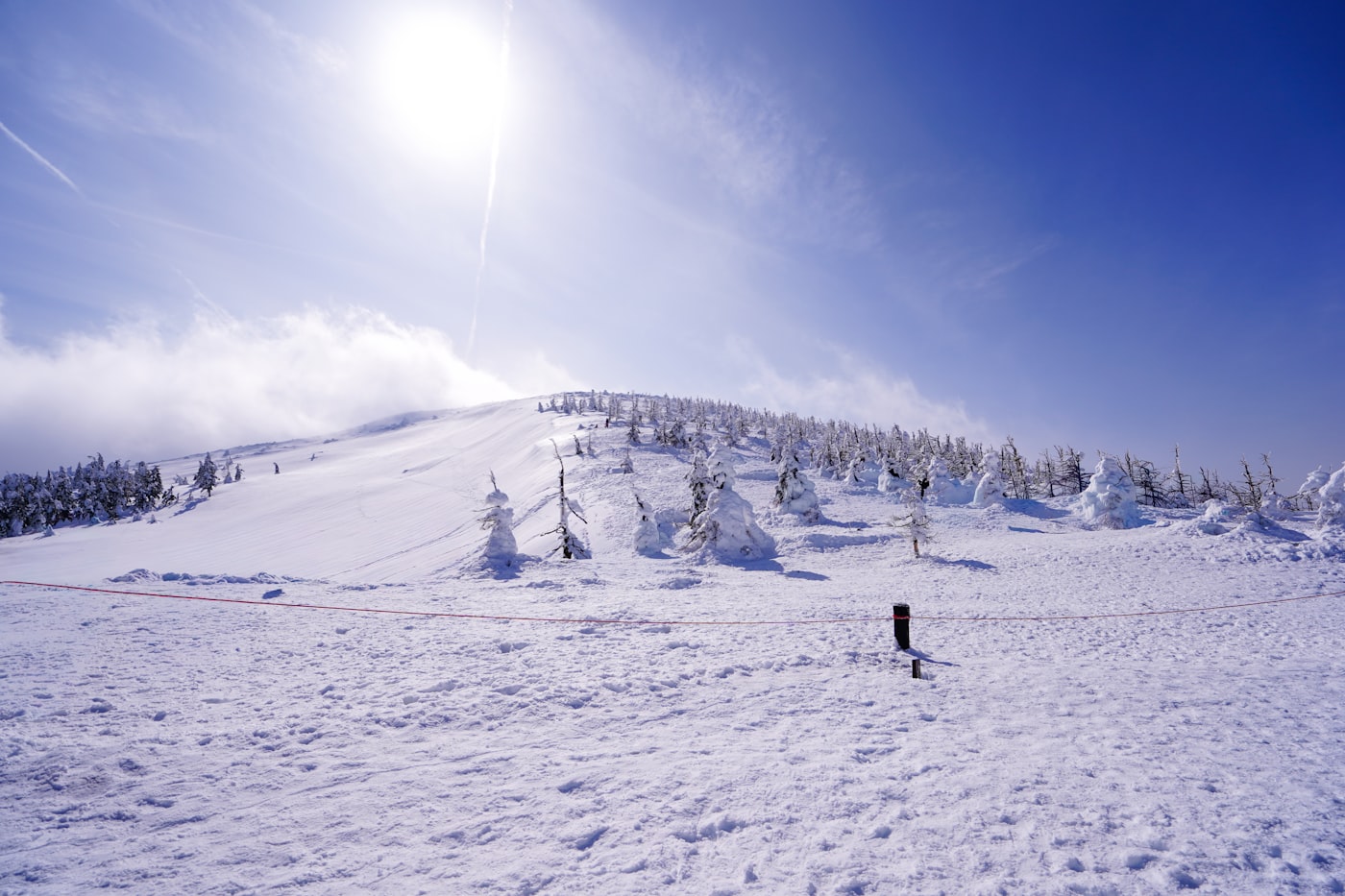
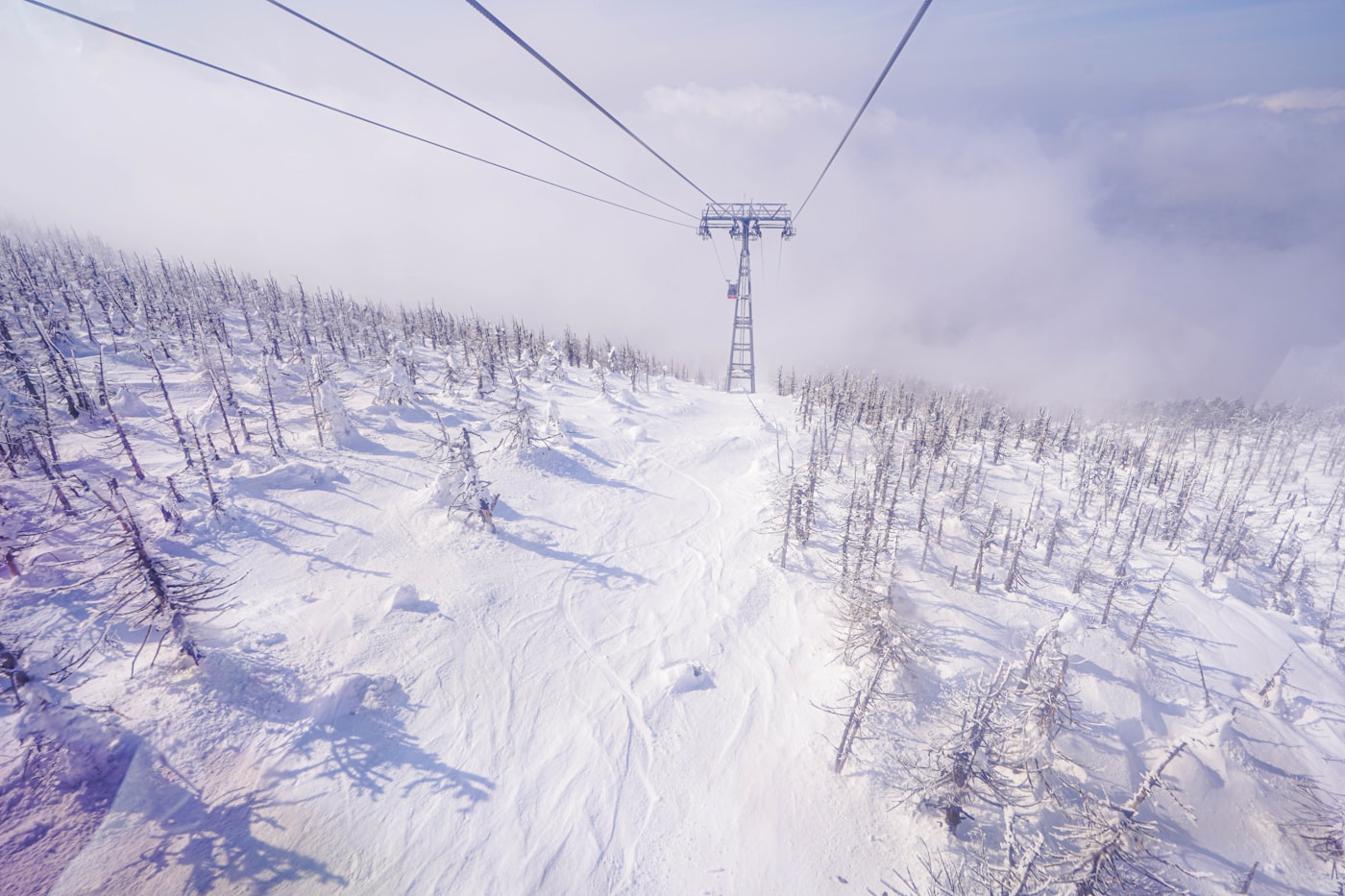
The recipe requires a coincidence of geography that almost nowhere else on Earth gets right. Winter monsoon winds cross the Sea of Japan, load themselves with moisture, and slam into the Zao range carrying supercooled water: droplets still liquid below freezing, waiting for something to touch. What they touch is a high forest of Maries' firs. The droplets freeze on impact, layer over layer, snow packing into the gaps, until by late January the trees have vanished inside their own weather. The Japanese call them juhyo.
Below the monsters sits Zao Onsen, a hot spring village working since roughly the 8th century, with water so acidic it eats metal. The standard day here is an hour with something ancient and inhuman on the ridge, then an evening neck-deep in milky sulfur water that stings the small cuts you didn't know you had.
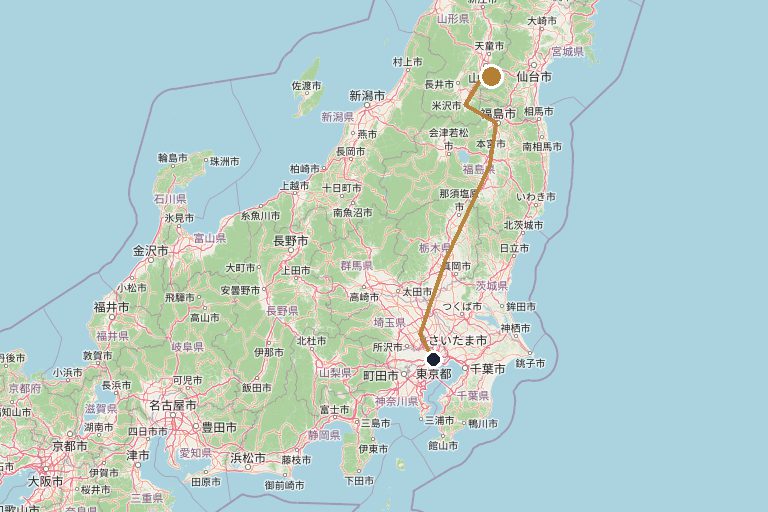
We chose it as Scene No.2 because it's the natural second act after Ginzan's gas lamps: same shinkansen line, same prefecture, completely different register. Ginzan is a preserved townscape. Zao is weather, rebuilt from scratch every winter and gone again by March.